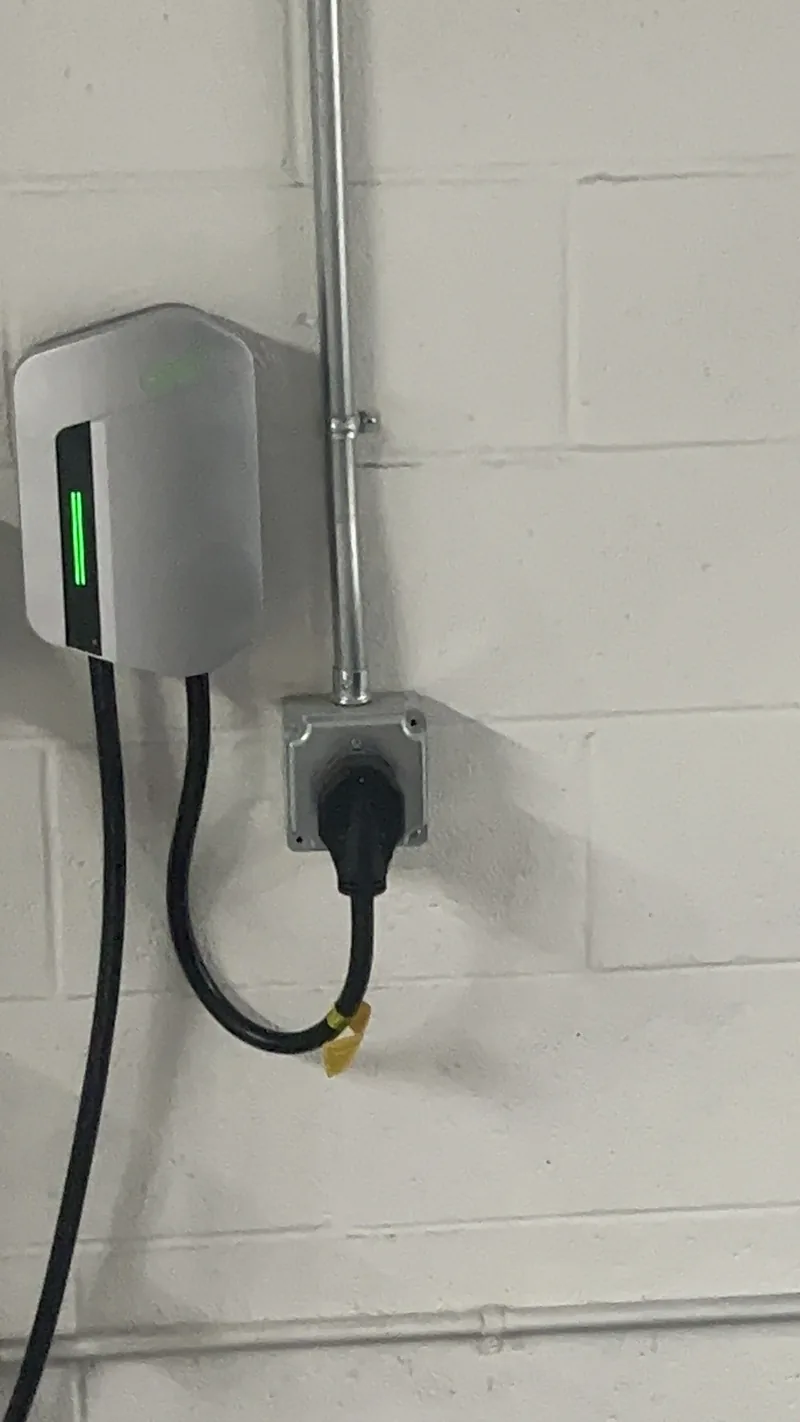
A Level 2 EV charger is one of the most practical upgrades for a La Costa homeowner. It also adds a serious continuous electrical load to the house. After 17 years working in Carlsbad homes, I can tell you the successful installs all start the same way: review the panel, calculate the load, pick the right charger location, and handle the permit correctly.
La Costa homes in 92009 range from older properties near La Costa Avenue to larger homes in communities like La Costa Oaks, Rancho Carrillo, and neighborhoods around Alga Road and El Camino Real. Some have newer 200-amp services. Others have panels that are already loaded with air conditioning, electric appliances, pool equipment, spa equipment, and remodel circuits. The installation needs to match the house, not just the vehicle.
Wheyland Electric provides EV charger installation in La Costa and full residential EV charger installation throughout Carlsbad and North County San Diego.
Why Level 2 Charging Is Different From a Standard Outlet
A standard 120-volt outlet is slow and not built to be the long-term charging strategy for most EV owners. A Level 2 charger uses a 240-volt circuit and delivers much faster charging. That improvement comes with a bigger electrical demand.
Most Level 2 chargers are set up on circuits ranging from 40 amps to 60 amps, with the exact circuit size based on the charger, manufacturer instructions, and desired charging output. Because EV charging is a continuous load, the circuit needs proper wire sizing, breaker sizing, terminations, and load calculation.
In La Costa garages, I often see homeowners assume the old dryer outlet or an open breaker space solves the problem. It does not. A charger circuit needs to be designed for EV charging, not borrowed from a circuit that was installed for another purpose.
Step One: Electrical Panel Load Review
The panel review decides what kind of charger installation the home can support. This is not a quick glance. I look at the main service size, the breaker layout, the existing major loads, the available spaces, and the actual demand on the house.
In La Costa, many homes already carry large loads. Air conditioning, pool pumps, electric ovens, spas, electric dryers, and remodel additions all affect capacity. A 200-amp panel often works well for EV charging, but it still needs calculation. A 100-amp or heavily loaded panel needs a more careful plan.
What the Electrician Looks At
A proper review includes the main panel rating, meter-main condition, existing breaker sizes, HVAC equipment, kitchen loads, laundry equipment, pool and spa circuits, sub-panels, solar equipment, battery systems, and any previous electrical modifications.
For homes in La Costa Oaks and Rancho Carrillo, I also look closely at garage sub-panels and previous remodel circuits. These homes often have clean-looking panels, but the actual circuit usage tells the real story.
The electrician’s job is to determine the safest charging amperage for the home. Sometimes that means a full-output charger. Sometimes that means setting the charger to a lower amperage. Sometimes the right answer is a panel upgrade or load management equipment.
Why Available Breaker Space Is Not Enough
An empty breaker space only means there is a physical slot. It does not mean the electrical service has capacity. I see this mistake constantly.
A homeowner opens the panel, sees two empty spaces, buys a charger, and assumes the job is simple. The real question is whether the home’s calculated load supports the added continuous EV load. A panel can look open and still be overloaded from a code and safety standpoint.
That is why a load calculation comes before installation. It protects the homeowner, the vehicle, and the electrical system.
Charger Placement in La Costa Garages
Most La Costa EV charger installations go in the garage. The right location depends on where the car parks, where the charging port sits, how the garage is used, and where the panel is located.
In many La Costa homes, the garage is also used for storage, bikes, tools, surfboards, cabinets, and home gym equipment. A charger placed in the wrong spot becomes a daily frustration. A charger placed correctly works cleanly for years.
Practical Placement Questions
Before installation, I ask where the vehicle parks now, whether a second EV is likely, which side the charging port is on, how long the cable is, whether the charger needs Wi-Fi signal, and whether cabinets or storage will block the charging path.
For homes with two-car garages off narrow driveways, I also think about cable routing. The cord should not cross a walkway or sit where it gets crushed by storage, tires, or the garage door track.
Wall-Mounted Versus Receptacle-Based Installations
A hardwired charger is usually the cleanest long-term installation. It has fewer connection points and avoids some problems that come from heavy-use plug and receptacle setups.
A receptacle-based installation still works when the equipment and circuit are installed correctly, but the receptacle must be rated for the load and installed to manufacturer and code requirements. Cheap parts do not belong on EV circuits. Heat at a receptacle is a real problem.
The decision comes down to the charger model, circuit size, homeowner needs, and whether the homeowner wants the option to unplug and replace the unit later.
HOA Coordination in La Costa Communities
HOA coordination matters in several La Costa neighborhoods. Communities like La Costa Oaks, Rancho Carrillo, and some condo or townhome developments have architectural rules about visible conduit, garage modifications, common walls, exterior routing, and shared electrical infrastructure.
For a single-family home with the panel near the garage, approval is usually straightforward. For townhomes, condos, or detached garage setups, the process needs more documentation.
What to Confirm With the HOA
Confirm whether the HOA requires an architectural application, whether exterior conduit is allowed, whether garage wall penetrations need approval, whether the charger is visible from a common area, and whether the electrical service is individual or shared.
The homeowner handles the HOA submission, but a professional electrician can provide the scope description, equipment location, and installation notes needed for approval.
City of Carlsbad Permit Process
La Costa EV charger installations go through the City of Carlsbad permit process. The permit documents the work and confirms that the installation was inspected.
This matters when the home is sold, when future electrical work is performed, and when insurance or property records need clean documentation. A permitted charger installation also protects the homeowner from hidden shortcut work.
Why the Permit Matters
The permit confirms that the circuit sizing, breaker, conductors, grounding, equipment, and installation method were reviewed. It also creates a record that the charger was installed as permanent electrical equipment, not as a garage shortcut.
Skipping the permit creates problems later. It is especially risky in La Costa homes where future buyers expect clean records for upgrades.
Common Installation Scenarios
Every charger job falls into one of a few practical categories. The difference is panel capacity, distance from the panel to the charger, and whether the home needs additional equipment.
Panel Has Capacity and the Garage Is Close
This is the cleanest installation. The panel has load capacity, the garage is close, and the charger location is straightforward. The electrician installs the new 240-volt circuit, mounts the charger, labels the panel, and completes the inspection process.
This is common in newer La Costa homes with 200-amp service and a panel located on or near the garage wall.
Panel Is Full but Service Capacity Is Acceptable
A full panel needs careful handling. The fix is not random breaker swapping. The electrician verifies whether the panel accepts tandem breakers, whether the existing breakers are correct, whether a sub-panel is appropriate, and whether the service still passes load calculation.
This happens often in homes that have had kitchen remodels, solar work, HVAC upgrades, or added outdoor circuits.
Panel Is Undersized
When the panel is undersized, the installation needs a bigger plan. The options include a panel upgrade, load management system, or lower-amperage charger configuration.
A lower-amperage charger is still useful for many homeowners. The right solution depends on driving habits, vehicle size, electrical capacity, and budget. The point is to choose the solution intentionally, not force a charger onto a panel that cannot support it.
What Homeowners Should Avoid
Do not connect a charger to an old dryer outlet without verifying the circuit. Do not use cheap receptacles on high-load charging circuits. Do not run extension cords. Do not ignore the load calculation. Do not let anyone install a charger without checking the panel.
EV charging is one of the largest continuous loads most homeowners add to a property. It needs professional installation.
Final Recommendation for La Costa EV Charger Installation
A clean La Costa EV charger installation starts with the panel and ends with a permitted, practical charging setup in the right garage location. The goal is not just to charge the car. The goal is to install a circuit that the home can safely support for years.
If you are planning a Level 2 charger in La Costa, contact Wheyland Electric for La Costa EV charger installation or visit our main EV charger installation service page to learn more.