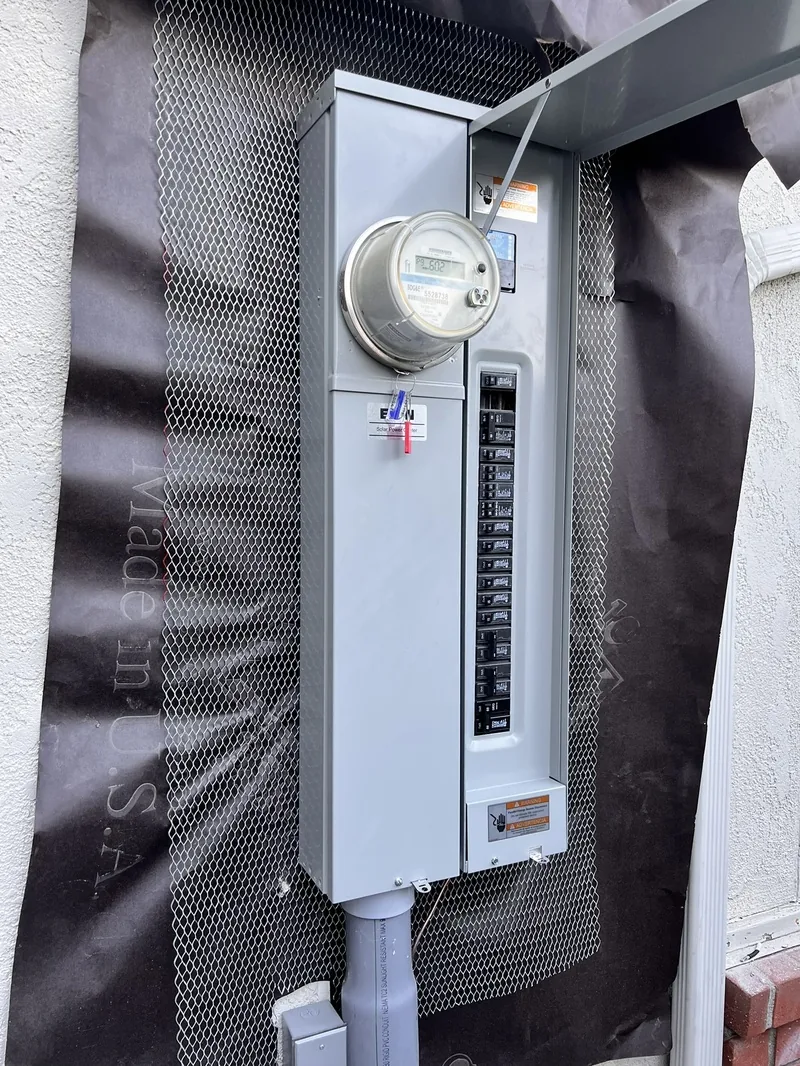
ADU electrical work in La Costa needs to be planned before construction starts. The electrical system has to support the way the unit will actually function: lighting, kitchen appliances, outlets, laundry, heating and cooling, water heating, smoke alarms, exterior lighting, internet equipment, and sometimes separate metering.
After 17 years working in Carlsbad electrical systems, I see the same ADU mistake repeatedly. Homeowners focus on plans, finishes, and rental layout, then discover late that the main panel is undersized, the sub-panel was not planned correctly, or SDG&E coordination adds time. Electrical planning belongs at the beginning of the project.
La Costa properties vary widely. A home in La Costa Oaks, Rancho Carrillo, or near Alga Road can have different panel locations, HOA requirements, service capacity, and access conditions. A detached ADU at the back of a larger lot is a different electrical project than a garage conversion attached to the house.
For homeowners planning an ADU in La Costa, Wheyland Electric provides ADU and remodel electrical services in La Costa and broader remodel, rewiring, and ADU electrical services throughout Carlsbad and North County San Diego.
Why ADU Electrical Planning Starts at the Main Panel
The main panel determines the electrical direction for the ADU. Before outlet locations or fixture selections, the electrician needs to know whether the existing service can support the added load.
An ADU adds real demand. A small unit with gas appliances and minimal HVAC has one load profile. A detached ADU with electric cooking, mini-split HVAC, electric water heating, laundry, and future EV charging has a very different load profile.
In La Costa, many homes already have air conditioning, pool equipment, kitchen remodel circuits, spa circuits, and garage loads. The ADU load gets added to that existing system. The panel review decides whether the project needs a sub-panel, service upgrade, load management, or separate meter strategy.
Load Calculation Comes First
A load calculation is the starting point. It accounts for the existing home, the proposed ADU, major appliances, HVAC, water heating, laundry, kitchen equipment, and other large loads.
This calculation prevents guesswork. It tells the homeowner whether the current service works or whether the electrical plan needs a bigger solution. If the home has a 200-amp service with available capacity, the ADU plan moves differently than a home with an older or already loaded panel.
Skipping this step creates expensive delays once plans are submitted or construction has started.
Sub-Panel Sizing for an ADU
Most ADUs are cleaner and easier to service when they have their own sub-panel. The sub-panel groups the ADU circuits in one location and makes future troubleshooting easier.
The sub-panel size needs to match the ADU’s actual loads. It is not picked randomly. It is based on appliances, HVAC, kitchen design, laundry, water heating, lighting, receptacles, and future use.
What Determines Sub-Panel Size
A studio garage conversion with basic loads needs a different sub-panel than a detached one-bedroom ADU with full kitchen, laundry, mini-split, and electric water heater. The electrician sizes the feeder and panel based on calculated demand, not square footage alone.
For La Costa homeowners planning rental use, the ADU should be wired for durability and convenience. Enough circuits in the right places matter. Undersizing the sub-panel creates nuisance trips and future limitations.
Detached Versus Attached ADUs
Detached ADUs require more planning. The electrical feeder may need to run from the main service to a structure at the rear of the property. That can involve trenching, conduit, feeder conductors, grounding electrodes, voltage drop planning, and inspection coordination.
Attached ADUs and garage conversions are usually more direct, but they still need proper circuit separation, GFCI/AFCI protection, smoke alarm integration where required, and clean panel labeling.
Separate Metering and SDG&E Coordination
Some La Costa homeowners want a separate meter for the ADU. Separate metering helps track utility usage when the unit is rented, but it adds complexity. It requires coordination with SDG&E and often affects service equipment design.
This decision needs to be made early. Separate metering is not something to casually add at the end of the project.
What to Expect
Separate metering involves utility review, service equipment planning, city approval, and scheduling around SDG&E requirements. The process affects the timeline and the electrical design.
For homeowners in HOA communities, meter placement can also affect exterior appearance and approval. The location needs to make sense electrically, practically, and architecturally.
City of Carlsbad ADU Permit Process
La Costa ADU projects go through the City of Carlsbad permit process. The electrical scope needs to match the approved plans, and the installation needs to pass inspection.
The city will look at the permitted electrical work, panel changes, circuit installation, grounding, smoke and carbon monoxide requirements, and final device installation.
Why Early Electrical Input Helps
Early electrical input prevents plan revisions. If the panel lacks capacity, the plans need to reflect the correct solution. If the detached ADU needs trenching, that route should be known before hardscape and landscaping decisions are finalized.
The electrician should review the plans before construction starts and identify conflicts between the design and the existing electrical system.
Inspections
ADU electrical inspections typically include rough-in, panel or sub-panel work, feeder installation, grounding, device installation, and final inspection. Service upgrades or separate metering add additional coordination.
The homeowner should understand inspection timing because electrical approval affects drywall, finishes, and project completion.
HOA Coordination in Rancho Carrillo and La Costa Oaks
HOA coordination matters in communities like Rancho Carrillo and La Costa Oaks. Even when ADU rights are allowed under state and local rules, HOAs still care about exterior appearance, equipment location, conduit routing, construction impacts, and architectural review procedures.
The electrical plan should respect those rules from the beginning.
What to Clarify With the HOA
Clarify whether exterior conduit is visible, where panels or meters can be placed, whether detached structures have architectural requirements, how construction access is handled, and whether equipment must be screened.
The homeowner submits to the HOA, but the electrician provides the technical details needed for a clear submission.
ADU Electrical Timeline Expectations
The electrical timeline depends on the ADU type, panel capacity, permit status, utility involvement, and construction schedule. A garage conversion with adequate service moves faster than a detached ADU with trenching and separate metering.
The electrical timeline should be part of the project schedule, not a last-minute line item.
Simple Attached ADU
A simple attached ADU or garage conversion with available panel capacity is the most direct path. The electrician installs or modifies circuits, adds the sub-panel if needed, completes rough-in, passes inspection, and returns for finish devices.
Detached ADU
A detached ADU takes more time because the feeder route must be built correctly. Trenching, conduit, conductor sizing, voltage drop, grounding, and sub-panel work all need inspection-ready installation.
This is common on larger La Costa lots where the ADU sits behind the main home or near a detached garage.
Service Upgrade or Separate Meter
A service upgrade or separate meter adds the most scheduling complexity. SDG&E coordination and city inspection timing need to be built into the schedule. Homeowners should not assume this happens in a few days.
Common ADU Electrical Mistakes
Common mistakes include undersized sub-panels, forgotten laundry circuits, missed kitchen appliance loads, no plan for HVAC, poor exterior equipment placement, no voltage drop planning for detached units, and late discovery that the main panel cannot support the ADU.
These mistakes are preventable when the electrician is involved early.
Final Recommendation for La Costa ADU Projects
A successful La Costa ADU electrical plan starts with the panel, load calculation, sub-panel design, permit path, HOA coordination, and utility decisions. The earlier those items are handled, the smoother the project runs.
If you are planning an ADU in La Costa, contact Wheyland Electric for La Costa remodel and ADU electrical services or visit our main remodel, rewiring, and ADU electrical service page.