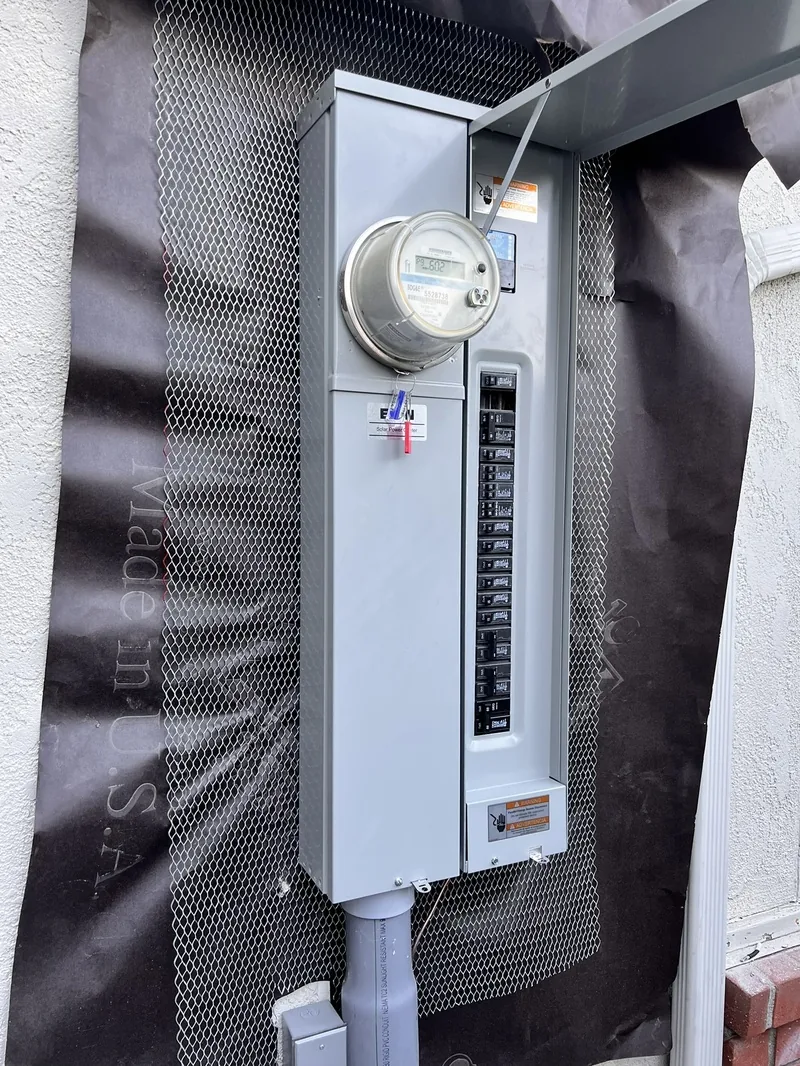
Most homeowners do not think about their electrical panel until something starts going wrong.
A breaker trips repeatedly. Lights dim when the air conditioner turns on. A remodel or EV charger gets planned and suddenly there is no room left in the panel. Sometimes the warning signs are subtle. Sometimes they are not.
The problem is that an outdated or unsafe panel is not just an inconvenience. It can affect reliability, insurance, resale, and most importantly, safety.
Why Older Panels Deserve Closer Attention
Many older homes in Carlsbad and North County San Diego were built around electrical demand that looks very different from what homes carry today.
At the time, 100-amp service might have been enough. Today, homes are far more likely to have central HVAC, larger kitchen loads, garage circuits, smart devices, home offices, and EV charging. That means older panels may be carrying more demand than they were ever intended to support.
Age alone does not prove a panel is unsafe. But age combined with warning signs absolutely deserves attention.
Common Signs Your Panel May Be Outdated or Unsafe
Repeated Breaker Trips
Occasional breaker trips can happen. Repeated trips under normal household use are different. That often means the system is overloaded, the breaker is failing, or the panel is struggling to support demand.
Flickering or Dimming Lights
If lights dim when major appliances start, it can signal capacity limitations or broader panel-related strain.
Heat, Buzzing, or Burning Odors
A panel should not smell hot, feel unusually warm, or make concerning buzzing sounds. Those are warning signs that should be evaluated immediately.
Visible Rust or Corrosion
Moisture, age, and environmental wear can all damage service equipment over time. Corrosion is a warning sign that should not be ignored.
No Room for New Circuits
Sometimes a panel becomes functionally outdated before it becomes obviously dangerous. If there is no room for additional breakers and the home needs new circuits, that is a sign the existing setup may no longer fit the home.
Panel Brands and Equipment That Raise Concern
Some older panels are more than just dated. They are widely recognized as higher risk.
Federal Pacific and Zinsco panels are two of the biggest examples. These panels are frequently flagged during inspections because of long-standing concerns about breaker reliability and fault protection.
If your home has one of these panels, replacement should be taken seriously even if the lights are still on and the breakers have not failed in an obvious way.
Why an Undersized Panel Can Become a Safety Problem
A panel does not have to be visibly damaged to be the wrong fit for the house.
An undersized panel often creates ongoing stress:
- circuits running closer to their limits
- fewer options for dedicated new loads
- more frequent nuisance trips
- more temptation to rely on workarounds instead of proper upgrades
If you are already hitting capacity limits, our electrical panel upgrades page explains the service side in more detail.
When Homeowners Usually Discover the Problem
A lot of panel issues come to light during a larger project rather than during everyday life.
Common triggers include:
- installing an EV charger
- replacing HVAC equipment
- planning a kitchen remodel
- adding garage or workshop circuits
- preparing a home for sale
- responding to an insurance request
That is why it is smart to evaluate the panel before a project gets blocked by electrical limitations.
If you are in Carlsbad specifically, our electrical panel upgrades in Carlsbad page is the best local service reference.
Why a Licensed Inspection Matters
You cannot always diagnose panel condition from the outside. Some problems are obvious, but others involve internal wear, outdated components, poor prior workmanship, or code issues that only a licensed electrician should assess.
The goal is not replacing panels unnecessarily. The goal is identifying when the existing panel is no longer a safe or practical fit for the home.
Final Takeaway
An outdated or unsafe electrical panel usually gives warning signs before it becomes a bigger problem. Repeated trips, limited capacity, heat, corrosion, and obsolete panel brands are all good reasons to have the system evaluated.
Wheyland Electric helps Carlsbad and North County San Diego homeowners determine whether a panel still makes sense as-is or whether it is time for a safer long-term upgrade.
Need help evaluating whether your panel is outdated or unsafe? Request a free estimate.