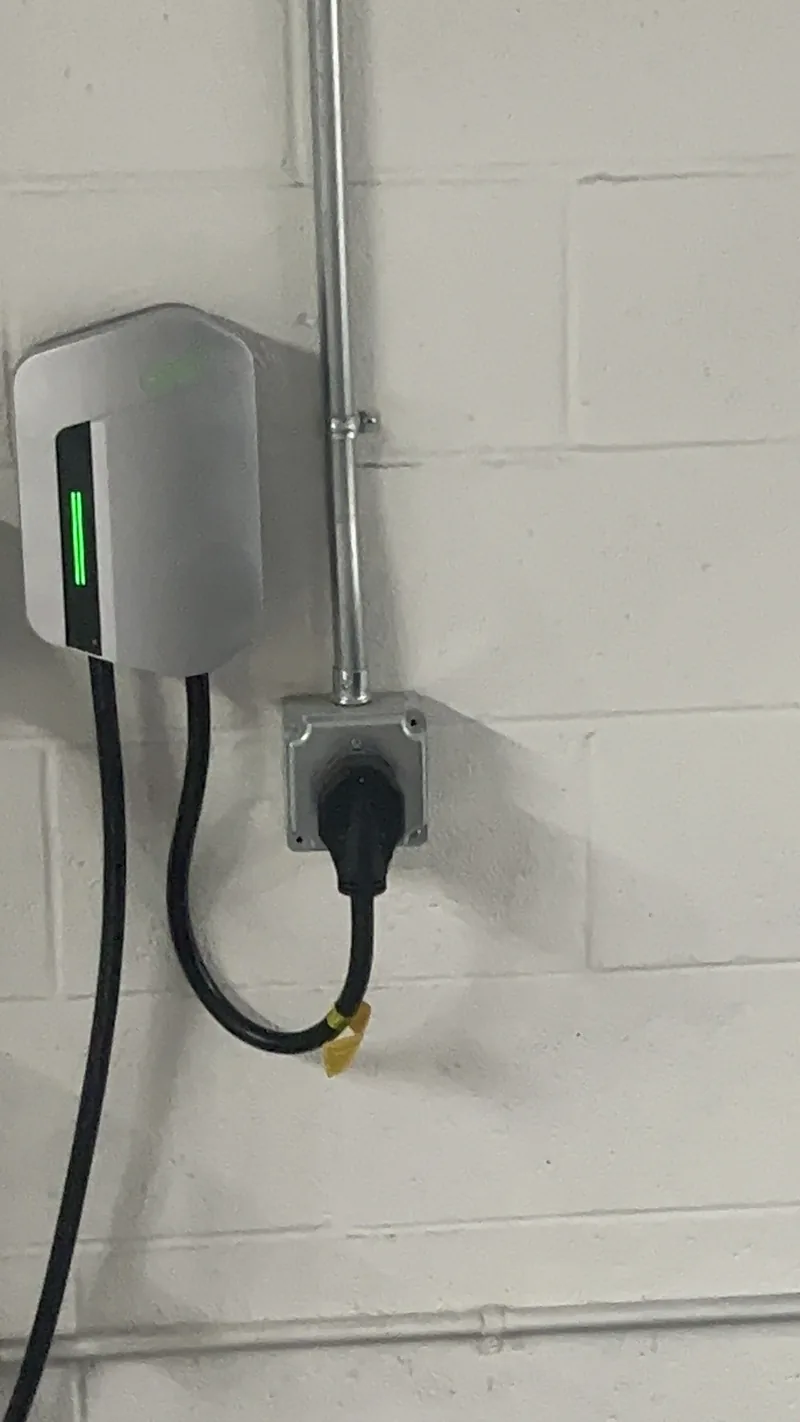
For many Carlsbad homeowners, the first question about home EV charging is not whether it is convenient. It is whether the installation cost is going to be reasonable.
The answer is yes in many cases, but the final number depends on the actual electrical conditions in your home. A straightforward installation can be relatively simple. A more complex job can expand quickly if the panel is undersized, the charger location is far from the service equipment, or the project needs to include additional upgrades.
Here is what really drives EV charger installation cost in Carlsbad in 2026.
The Biggest Cost Drivers
There is no single flat price because not every home starts from the same place.
Panel Capacity
One of the largest cost variables is whether the existing electrical panel can support the charger. If the panel has enough capacity and open breaker space, the installation is usually much more straightforward.
If the panel is already full, is only 100 amps, or is already supporting heavy household loads, the project may need a load review, load-management solution, or electrical panel upgrade. That changes the scope significantly.
Distance From the Panel
A charger installed close to the panel is usually less expensive than one that requires a longer run through finished walls, an attic, exterior conduit, or a detached garage path.
Wire length, labor time, and routing complexity all matter.
Charger Type and Amperage
Not every charger setup is identical. A modest Level 2 charger with manageable amperage may fit the home more easily than a larger high-output setup.
For many homeowners, the right answer is not the highest-output charger on the market. It is the charger that fits daily driving needs and works cleanly with the home’s electrical system.
Permit and Inspection
A proper EV charger installation should be permitted and carried through final inspection. That is not an optional extra. It is part of doing the work correctly.
Our Carlsbad EV charger permit guide explains that process in more detail.
What a Straightforward Installation Usually Includes
For a typical home with adequate panel capacity and a practical charger location, the scope often includes:
- site review
- dedicated 240V circuit
- breaker and wire installation
- charger mounting
- permit handling
- final inspection
In those cases, the cost is often much more manageable than homeowners expect.
What Makes the Price Go Up
Projects become more expensive when they include one or more of the following:
- panel is full or undersized
- wire run is long
- detached garage routing is required
- finished surfaces make access harder
- service equipment needs correction
- homeowner wants future-ready planning for a second EV
If you are already thinking ahead to a second vehicle, that can be worth planning for now rather than rebuilding the charging setup later.
Why Cheap Quotes Are Not Always Cheap
Low quotes often leave out important parts of the real scope.
Common omissions include:
- permit fees
- inspection handling
- realistic routing complexity
- panel corrections
- final charger setup details
That does not mean every higher quote is justified. It means the only useful quote is one that reflects the real project.
The goal is not simply getting a charger on the wall. The goal is getting a charger that is safe, code-compliant, and practical for daily use.
Cost Planning in Older Carlsbad Homes
Carlsbad has many homes with older 100-amp service, limited circuit space, or previous electrical work that was fine for the house as it existed years ago but is less ideal for modern EV charging demand.
That is why the first step should always be an evaluation of the actual electrical system before choosing equipment or assuming the project is simple.
Our EV charger installation page covers the service side, and our Carlsbad EV charger installation page is the best local service reference.
Final Takeaway
EV charger installation cost in Carlsbad depends less on generic online averages and more on the real condition of your panel, the charger location, and whether the installation is being planned correctly from the start.
Wheyland Electric helps homeowners across Carlsbad and North County San Diego install EV chargers with clear scope, code-compliant work, and realistic planning.
Need a real quote for your home charging setup? Request a free estimate.