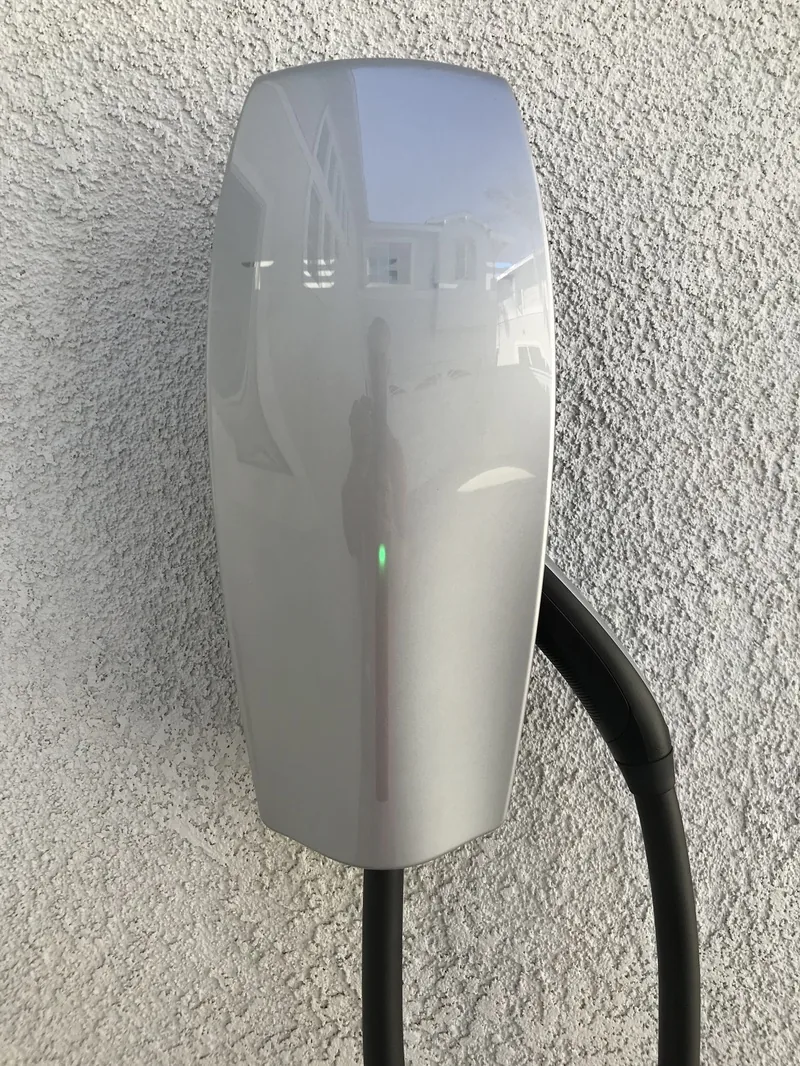
Installing a home EV charger in Carlsbad is one of the smartest upgrades a homeowner can make, but it is also one of the most commonly misunderstood electrical projects.
A lot of homeowners assume the charger can just be mounted in the garage, connected to a new breaker, and called done. That is not how the job should be handled. In most cases, a Level 2 charger installation requires a permit and final inspection.
If you are planning to charge at home, this guide explains what the Carlsbad EV charger permit process actually involves and why it matters.
Why EV Charger Permits Matter
A Level 2 EV charger is not the same as plugging into a standard outlet. It typically requires a dedicated 240V circuit, properly sized wire, overcurrent protection, and a charger installation that matches current electrical code.
That means the project affects more than just the charging equipment itself. It also affects:
- panel capacity
- breaker space
- wire sizing
- installation method
- grounding and bonding
- final inspection documentation
A permit is how that scope gets reviewed and properly signed off.
When a Permit Is Usually Required
For most Carlsbad homeowners, a permit is required when installing a new Level 2 charger because the project includes new electrical work.
That generally includes:
- adding a new 240V circuit
- installing a hardwired charger
- adding a new receptacle for EV charging
- modifying the panel
- upgrading service capacity as part of the project
If the installation touches the electrical system in any meaningful way, it should be treated as permitted work.
What the Permit Process Usually Looks Like
The process itself is usually straightforward when it is handled correctly.
1. Site Review and Scope Definition
The first step is evaluating the existing electrical system. A licensed electrician should confirm whether the panel has enough capacity, whether there is room for the required breaker, and how the charger circuit will be routed.
If the home still has older 100-amp service or limited breaker space, the project may need to include electrical panel upgrades as part of the final scope.
2. Permit Pulling
Once the scope is defined, the contractor pulls the permit. This is one of the clearest signs you are dealing with a legitimate electrical contractor rather than someone trying to shortcut the work.
3. Installation
The charger circuit is installed, the charger is mounted, and all electrical work is completed to the permitted scope. Depending on the home, this may involve conduit, garage-wall routing, exterior transitions, or panel modifications.
4. Final Inspection
After installation, the project should pass final inspection. That final sign-off matters because it creates proper documentation and confirms the work meets code requirements.
Common Reasons EV Charger Jobs Get More Complicated
Some projects stay simple. Others do not.
The most common reasons the scope expands are:
- the panel is already full
- the service is only 100 amps
- the desired charger amperage is higher than the system can cleanly support
- the charger location is far from the panel
- the homeowner is planning for a second EV later
If your charger project exposes a capacity issue, it often makes sense to address it once rather than piecing things together later. Our EV charger installation page explains the broader service side.
Why Homeowners Should Not Skip the Permit
Skipping the permit might sound faster, but it creates avoidable problems.
Unpermitted electrical work can create issues during resale, raise insurance concerns, and leave the homeowner without proper documentation if something later goes wrong. It also removes the inspection step that helps catch installation mistakes before they become long-term liabilities.
A charger that appears to work is not the same thing as a charger that was installed correctly.
Planning for the Long Term
If you are already thinking about a second EV, a future panel upgrade, or larger electrical projects, it is smart to plan with those next steps in mind now. In many homes, the best EV charger installation is the one that does not need to be redone when the next load gets added.
That is especially true in Carlsbad homes with older panels or limited capacity.
Final Takeaway
A Carlsbad EV charger permit is not red tape for the sake of red tape. It is the process that helps make sure the installation is safe, code-compliant, and properly documented from the start.
Wheyland Electric helps homeowners across Carlsbad and North County San Diego handle EV charger projects the right way, from panel evaluation through final inspection.
Need help planning a permitted EV charger installation? Request a free estimate.